
Insights on Procurement Intelligence
Perspectives on procurement complexity, bid evaluation, and the tools that actually move the needle for capital-intensive industries.
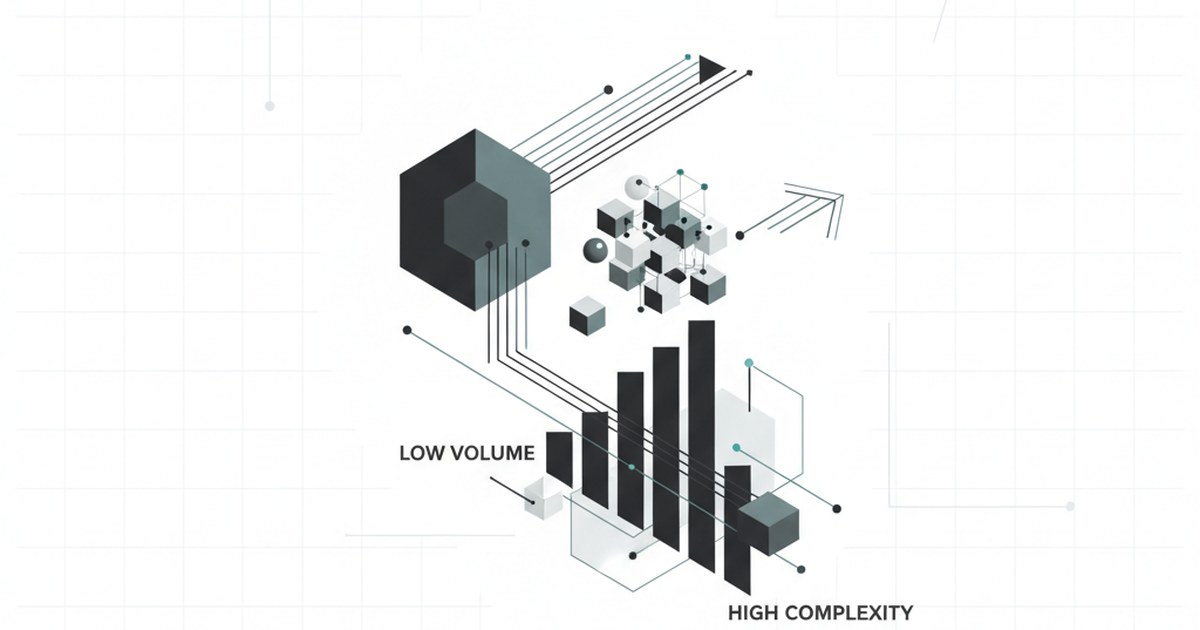
Why Procurement Systems Must Handle Low Volume High Complexity Spend
It’s easy to focus on high-volume purchases, but low-volume, high-complexity spend often causes the biggest headaches. From custom parts to niche services, these intricate buys require specialized vetting and better collaboration. Here’s why your procurement system needs to account for the complex stuff to avoid hidden costs and delays.

How AI Changes Supplier Qualification in Safety Critical Industries
In safety-critical industries, traditional supplier qualification is often a slow, manual bottleneck. This post explores how AI tools like predictive analytics and NLP are streamlining risk assessment, automating compliance checks, and improving collaboration to help companies build faster, more reliable supply chains.

How Procurement Systems Enable Faster Supplier Onboarding
Chasing down W-9s and insurance forms through email slows down your supply chain. Modern procurement systems replace manual paperwork with automated workflows and centralized data. By streamlining document collection and compliance checks, these tools help you get new suppliers up and running faster without sacrificing risk management.

How Industrial Supply Chains Fail Under Schedule Compression
Rushing industrial schedules often triggers a domino effect of supplier delays and quality failures. When speed takes priority over documentation and visibility, the entire supply chain becomes vulnerable. This breakdown explores why expedited timelines backfire and how to maintain operational integrity under pressure.

How Automation Reduces Procurement Firefighting in Manufacturing
Manufacturing procurement often feels like a constant cycle of crisis management. This post explores how automation breaks that cycle by improving visibility and streamlining supplier relationships. Learn how moving from reactive "firefighting" to a proactive strategy can lower costs and improve overall production efficiency.

How AI Improves Sourcing Decisions Under Uncertainty
Procurement teams face constant volatility in prices and demand. This explores how AI provides clarity through predictive analytics, real-time supplier risk monitoring, and dynamic pricing. By leveraging data-driven insights, sourcing leaders can move from reactive troubleshooting to proactive strategies that protect margins and supply chains.

Why Procurement Needs Better Insight Into Supplier Constraints
Understanding your suppliers’ limits—like labor issues or raw material shortages—is the difference between a resilient supply chain and a constant state of crisis. By using data and better communication to get ahead of these constraints, procurement teams can move past simple transactions to build more strategic, reliable partnerships.

How System Integrators Lose Margin Through Fragmented Procurement
Fragmented procurement often leads to inconsistent pricing, lost volume discounts, and excessive administrative hurdles. For system integrators, these inefficiencies directly impact project margins. This post explores the hidden costs of disjointed buying and how a consolidated approach can help regain control and improve profitability.

How AI Improves Cost Predictability in Project Procurement
Unforeseen costs often derail project budgets, but AI is changing how procurement teams handle predictability. By analyzing historical data and supplier performance in real-time, AI helps identify risks before they hit the balance sheet. This post covers how automation and scenario planning lead to more accurate, reliable financial outcomes.

How Procurement Software Improves Capital Allocation Decisions
Manual data and siloed systems make it difficult to balance cost efficiency with strategic investment. Procurement software provides the visibility needed to evaluate suppliers, automate workflows, and align spending with financial goals. This post looks at how centralizing data leads to smarter, faster capital allocation decisions.